|
You are reading the older HTML site
Positive Feedback
ISSUE
52
The DaVinci Grand Reference Grandezza Phonograph
Cartridge: The Murder of Gonzago or Proof that a Sufficiently Advanced Technology is
Indistinguishable from Magic (*)
"Now I've heard there was a secret chord –Leonard Cohen
"When you were young –Neutral Milk Hotel
"[…] the play's the thing –Hamlet Act 2, scene 2, 604–605
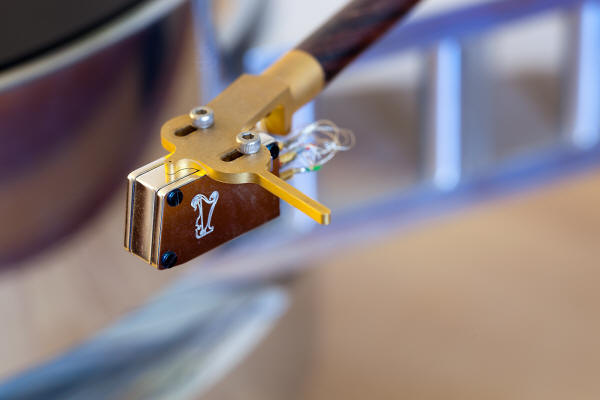
My understanding—as a layperson—of the quest for Holy Grail, the real one, not the Monty Python film, is that within the context of Arthurian legend, King Arthur hoped that the restorative powers of the grail would bring peace and prosperity back to England. Taking a sip from the Holy Grail—in its simplest form a cup—was the equivalent of ingesting the ultimate, Arthurian antidepressant. In a similar sense (*), Arthur C. Clarke's comment, "Any sufficiently advanced technology is indistinguishable from magic," implies—to me—that if someone had dissolved a sufficient amount of Prozac in spring water and served it from a golden cup, that cup could have been misinterpreted as the Holy Grail. Of course I'm being whimsical; but the point is to say that despite the many fine phonograph cartridges I have heard over the years, including the Linn K9, the Grace F9E, a denuded version of the Spectral MCR Signature IIB, the Linn Troika, The Transfiguration AF-1, the Lyra Parnassus D.C.t, Titan and Titan i, the Dynavector DRT XV-1s and the original DaVinci Reference Grandezza Phonograph Cartridge (notice the absence of the word "Grand"), I have never been moved by the sound of a phonograph cartridge so much as I am by the latest masterwork from DaVinci, the Grand Reference Grandezza Phonograph Cartridge; and I have no idea how or why.
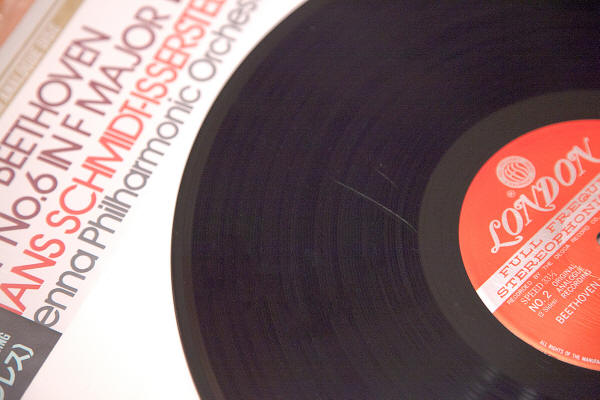
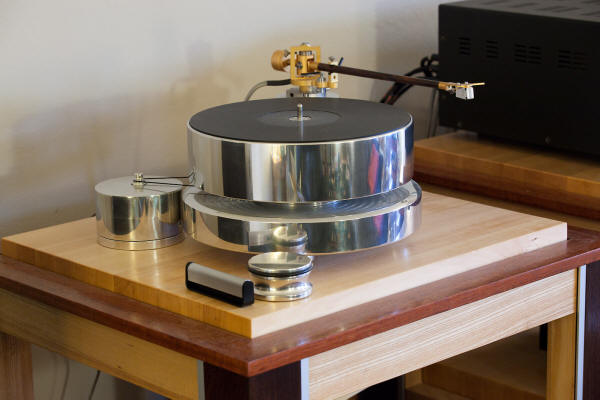
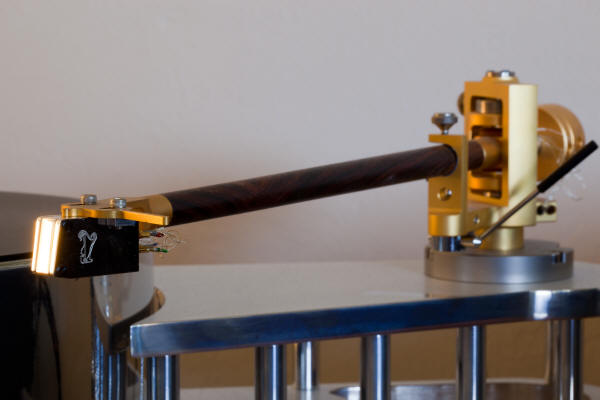
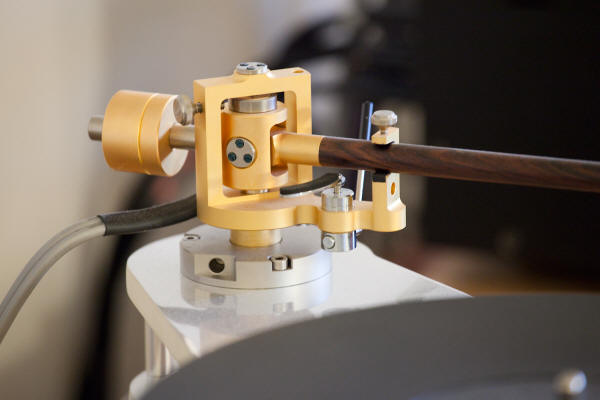
It all began with a trip to Princeton, NJ to visit my nephews Ben and Asher; their mother, Amy, and I visited the Princeton Record Exchange in downtown Princeton and I picked up a Super Analogue Disc of Beethoven's Symphony No. 6, "Pastoral", by the Vienna Philharmonic under Hans Schmidt-Isserstedt. I got home and was very excited about playing it; but it was late and I was tired and despite the robustness of the cartridge, I dropped the record at just exactly the right angle to slip between my 3" thick turntable platter and DaVinci Grand Reference Grandezza 12 inch tonearm so thatI just grazed the stylus, just enough to ruin the record by scratching it and nailing the cantilever. So the proverbial Nick sent it back to DaVinci and they politely confirmed that it was broken but offered to allow me to either (a) repair it for X dollars or (b) replace it with a newer version, for Y dollars, with Nick strongly encouraging me to choose option (b) not because he would make more money for him but because he was so excited and so sure that the new cartridge would sound better. So I paid Y dollars and not long thereafter the new cartridge arrived, superficially identical to the old one; and Nick mounted it to my 12" DaVinci Grand Reference Grandezza tonearm on my Transrotor Fat Bob Reference.
From the very first moment, I was stunned; there was a clarity and neutrality to the music that I had never heard before and although the non-Grand DaVinci Reference Grandezza phonograph cartridge had stunned me in its own way, it was more of a refinement of all the very fine phonograph cartridges I have heard; to put it in "film pitch" terms, it was sort of like the Lyra Titan i meets the Transfiguration AF-1, and I wondered how it would sound in comparison to the Lyra Olympos. With the DaVinci Grand Reference Grandezza phonograph cartridge, I no longer felt that I was listening to music but—to paraphrase T. S. Eliot one more time—I was the music while the music lasted; it represented a quantum leap in sound performance, and to look at it you would have no idea (as far as I can tell) that it's the Grand Reference Grandezza as opposed to the non-Grand Reference Grandezza. I will say that it has to be in the right system; you can't just pop it in a Rega P3-24 or an SME Model 30/2 with a Graham Phantom B44 tonearm. To that end, here is my reference-level analog front end: (1) DaVinci Grand Reference Grandezza phonograph cartridge
(2) DaVinci Grand Reference Grandezza tonearm (12" version)
(3) Transrotor Fat Bob Reference with the armboard for the 12" DaVinci tonearm and ONE motor/motor controller (4) DaVinci MC stepup transformer
(5) Kondo Sound Labs KSL-LP 1 meter interconnect cable with Eichmann Silver Bullet Plugs (6) Phonostage, decked out with Black Gate capacitors and NOS tubes hand-selected and matched by Nick Gowan at True Sound in Campbell, CA in my Audio Note Meishu Phono Silver integrated amplifier (Please don't call Nick to B. S. with him about tubes; just send him your phonostage and let him fine tune it AFTER talking to him first.) (7) Custom designed stands for the Transrotor and the Meishu created by Nick Gowan at True Sound and Aspy Khambatta in Berkeley, CA and implemented by Aspy. In this front end, the Grand Reference Grandezza phonograph cartridge is a natural match and truly excels; however, you are buying into a system of sorts, perhaps not as religiously as a Linn system, but—like I said—this you cannot drop this cartridge into any old turntable/tonearm combination (even though dropping a record is what led me to it). So, how do I begin to describe the sound of the DaVinci cartridge (I think we'll leave out "Grand Reference Grandezza" from now; but that IS the one we're talking about). Well, I would say there's quiet neutrality to it, less artifice, more "air", with a deeper, wider sound; I'm not talking about traditional audiophile terminology like "imaging" and "soundstage". I'm talking about a cartridge that—without going into the long spiel about how it just disappears and is more neutral than any other cartridge I've heard (yada, yada, yada)—does, in fact, get out of the way and bring you closer to the music than any cartridge I've ever; and that's a very different thing. Let me give you an example. When my system was in transition, I was using an SME Model 30/2 (the original Model 30 is better sounding IMHO) with a Graham 2.0 Deluxe tonearm and a Lyra Titan and Titan i cartridge; I had an Audio Note AN-S2 MC stepup transformer and an Mistral/LFD phonostage, all going into a 2-3 watt/channel Audion Silver Knight II amplifier based on a pair of single 2A3 tubes/channel, all driving my original Audio Note AN-J/Lexus (or "AN-J/Lx") loudspeakers with the Makassar wood finish. It was a terribly underpowered system and top heavy in terms of cost if you look at the MSRP of the Model 30/2, which is not so much constantly on back order as MADE to order; however, as my infamous friend Gerry pointed out, the woodwinds in the original Classic Records reissue of Pictures at an Exhibition sounded very delicate and real, so much so that to this day Gerry attributes near magical powers to the Audion Silver Knight II though I think it may be more the 2A3 tubes themselves that gave the sound such a delicate and lovely bass, not to mention the ultra-black backdrop that most Model 30's do, in fact, offer. With my new analog front end—featuring the new version of the DaVinci cartridge—I get that same delicacy even with the beefier 300B-based Audio Note Meishu Phono Silver; however, I also get a realer sound, which is a very difficult thing to describe. As I have been writing the past couple of paragraphs, I have been playing the movie "Inception" on my well calibrated Theta Compli Blu and Sony KDL-40HX800 in 1080/24p mode. It's an interesting and beautifully imaged film; but more importantly it is, at its core, about the architecture of dreams and the suspension of disbelief. So in that sense, the DaVinci does create a dream space in which you become connected to the music, as if in reality only it comes from this spinning slab of vinyl that's been flattened out and pressed with musical grooves that wiggle. It grabs you and arrests you at the deepest level and if you close your eyes and try very hard not to feel the couch or armchair around you too much, you really can believe that you're sitting in the audience at "The Köln Concert" on January 24, 1975 (my 15th birthday) and see Keith Jarrett in your mind's eye as if you could somehow load an original German pressing directly into the slot in your forehead (but please don't make one). It is in fact that suspension of disbelief, not some audiophile quality like "imagining" or "soundstage" or even my own word, "neutrality", that makes the new DaVinci cartridge special. It is more a hallucinogenic drug than a piece of carefully sculpted metal with hand-turned coils and magnets. There is a ide effect to this level of fidelity: you really hear the glorious recordings clearly and the turkeys are also quite apparent; as an example, the Groove Note 45RPM Double LP of Jacintha's Autumn Leaves is stunning in a way I have only heard from an SACD before, with deep, rich bass that easily rivals the most adeptly setup Model 30. On the other hand, I am currently listening to Elvis Costello's National Ransom which appears to have been compressed in a way intended mostly for AM radio airplay; but when a passage with a clean recording of strings or a voice comes along, like the second track, "Jimmie Standing in the Rain", which is blissfully minimal, it really draws you in and you forget that you're listening via a stereo system; you just hear the music. So, apart from inviting the entire audiophile community to my place to listen to this remarkable cartridge, how do you audition it? Sadly, I'm not sure you can; you MIGHT be able to hear it at True Sound in Campbell if you call in advance and talk to Nick, assuming you live or are willing to come anywhere near the San Francisco Bay Area (and at this level a $500 cross country plane ticket to hear it in an Ongaku-based system is not necessarily as stupid as it initially sounds; plus you get the pleasure of meeting Nick, whom I sometimes think of as Michael Caine's younger brother with a less cockney-edged British accent). Then again, you could just buy the damned thing, turntable, tonearm and all. That's essentially what I did; and even if I wound up in a studio apartment with my Ekornes Stressless Chair, "personal table", MacBook Air and stereo system (plus a daybed, futon or foam slab on the floor; i.e., something to sleep on), I would be happy with my decision. And I really don't know that I can give a higher compliment to a piece of audio equipment than to describe it—simply—as magical. Kindest regards, Andy P. S. The more I listen to it, the better I like the sound of "National Ransom". Go Elvis.
|