|
You are reading the older HTML site
Positive Feedback ISSUE 55
Building a Digital Music Server, Epilog, Part 3: A
Brief and Less Expensive Departure from the Norm
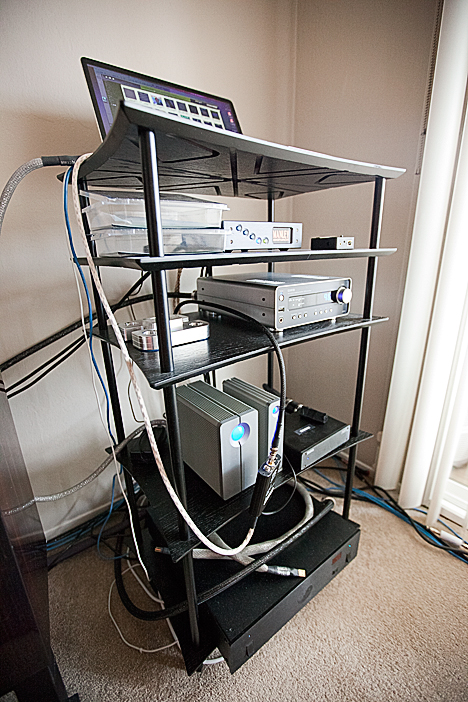
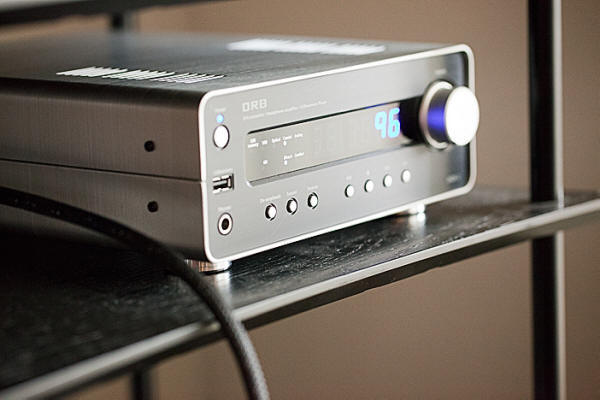
No, you can't always get what you want –The Rolling Stones A few things happened around that same time that gave me the opportunity to try replacing some parts in my digital music server—temporarily—just to see what one can do with sound; to that end, I made the following changes to my default arrangement: (1) I changed out the Locus Design Cynosure USB cable for an ALO Audio Signature Series Lariat USB cable. (2) I replaced the Audiophilleo 1 with a KingRex UC192 using the KingRex external PSU (Power Supply Unit). (3) While my Rega DAC is being updated, I dropped the Orb Jade 2 DAC into place, still using the Locus Design Core S/PDIF cable. (4) I changed out the Locus Design Parables—which are amazing—for the ALO Audio Signature Series Reference Interconnect cable. (5) I started using Pure Music in place of Amarra.
Again, none of these are permanent changes, but I had the opportunity to try some less expensive "parts" (with the exception of the Rega DAC, which really should cost $5000 but sells for $995) and see if I enjoyed the music as much. The truth of the matter is that I am really digging it. As I write this, I'm listening to "The Girl from Ipanema" via the 24/96 download of Getz/Gilberto from HDtracks and the sound is very open, natural and seductive. Please remember that I'm still using a 17" MacBook Pro with a 3.06GHz Intel Core Duo processor and 8GB of RAM plus a 256GB solid state drive for applications, with music stored on a LaCie RAID 1 drive via a Locus Design Herald FireWire 400 cable using a cryogenically treated Sonnet FireWire 400 to 800 adapter that I picked up from Amazon and had treated by Cryo-Parts. While I don't have the rocking bass that I have come to expect from my Cynosure, Rega DAC and Parables, there is a pureness of tone to the midrange and a musicality to the sound that makes everything very listenable and enjoyable. The treble is also quite sweet and extended if a bit too gentle. Listening to Eric Clapton's 461 Ocean Boulevard at 24/96, I get a cleanness and tightness to the bass that—while not the last word in depth and authority—still manages to focus the lyrics and guitar chords precisely; I am reminded, again, of a slightly more sophisticated version of my old Quad ESL-63 USA Monitors after they had been modified the first time, with all MIT hookup wire. I also find that, unlike some other alternative arrangements I have had, I keep wanting to listen to music and I want to hear the whole album, not just a few sample tracks. That's a good thing. I would imagine that a 13" MacBook Pro or a Mac Mini would do an excellent job as well, either with an external RAID drive or SSD (Solid State Drive) for music storage. In my belief that this would be a particularly good arrangement for classical music, I put on the Linn 24/192 recording by Phantasm called John Ward: Consort music for five and six viols and while I might have missed the very deepest, most gut wrenching bass that I get from the Cynosure, Rega and Parable combination, the system gently untangled all the viols and gave me a lovely little midrange push, rather like a good tube amp of yesteryear, again strangely drawing me into the music and making me want to listen to track after track after track. Now let's talk a little about Pure Music. I have historically been very biased towards Amarra not because I did a careful side by side comparison to Pure Music, but because the folks who helped me setup my first digital music server suggested that I use Amarra; however, as much as I like Amarra and as wonderful as their technical support is, it does have a "prosumer" feel to it, meaning that it contains lots of features not necessarily needed by the average user and it's not quite as easy to operate, right out of the metaphorical box, as Pure Music. Indeed, Pure Music does seem a bit easier to operate in that classic Apple sense (not that it's written by Apple) of load it up and let it run; plus, it's a lot less expensive than the full version of Amarra. It also has a host of features of its own that begin to rival and sometimes exceed Amarra's; but what I look for is the sound. In other words, in their default state, docked to iTunes and streaming data off of my RAID 1 drive, which sounds better or in what ways do they differ? I would say that my comments throughout this article epitomize the difference I hear between Pure Music and Amarra, all other things being equal. Pure Music has a gentler, more melodious quality to it, making it a little easier to hum, tap one's toe and follow along with the music; however, Amarra does dig a little deeper into the soul of the music, sometimes too deep, and can help to deliver that gut wrenching quality I expect when Eric Clapton fires up the electric guitar on "Cocaine". Neither is right nor wrong; they're just different. If I had to pick one, I couldn't. It's like choosing between a VPI and an SME turntable; the latter is more expensive so you want it to be better, but mostly it's just different.
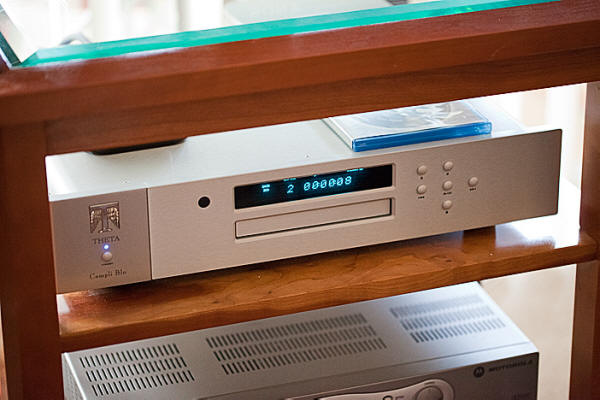
In a kind of a wild and crazy idea, I loaded my favorite SHM-SACD, Steely Dan's Aja, into my Theta Compli Blu which runs the music produced from SACD's through 4.5 meters of Audio Note Lexus copper interconnects into the same Manley Skipjack as the ALO Audio Signature Series Reference interconnect cable from the digital music server and listened for differences. Truthfully, they were not that dramatic. The SACD had more depth and definition with deeper bass and a broader dynamic range. It also had a more extended treble; but in terms of the essence of the music, both the "cost effective digital music server configuration" and the SACD were twin sons of different mothers. They both played music well and I enjoyed it; and isn't that what it's all about? With the digital music server, the midrange got pushed forward a little but not in a harsh or annoying sense just, like I said, like my old Quads; I think the midrange detail was also a little more articulate, again like the Quads. Put simply, substituting some comparatively inexpensive components and software for some very pricey state of the art ones and dropping a slightly more expensive DAC ($1799 for the Orb Jade 2) with a lot of system synergy gave me a very enjoyable afternoon—and perhaps lifetime—of listening to music; and that, my friends, is what this crazy hobby is all about. Kindest regards, Andy
|